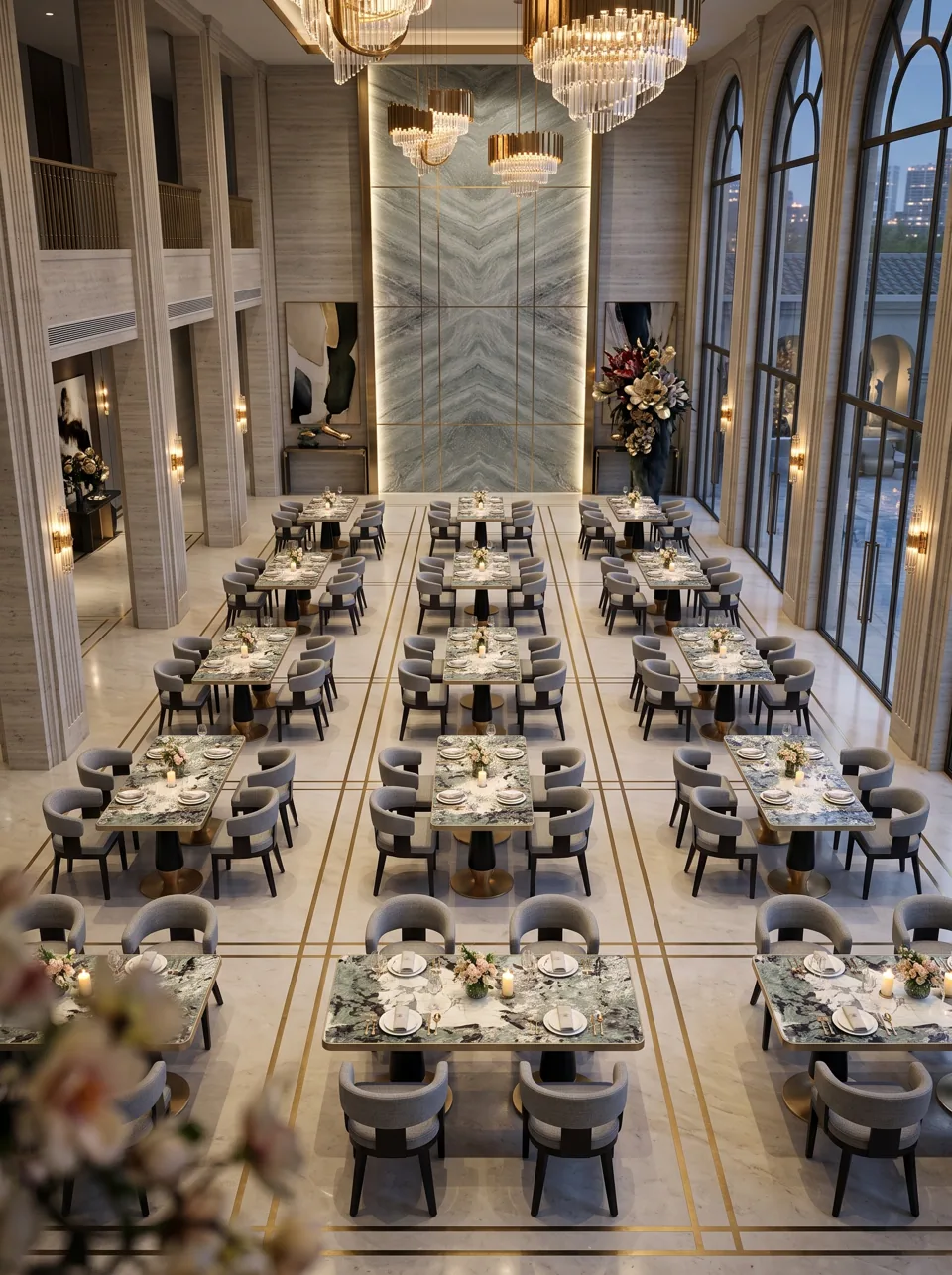
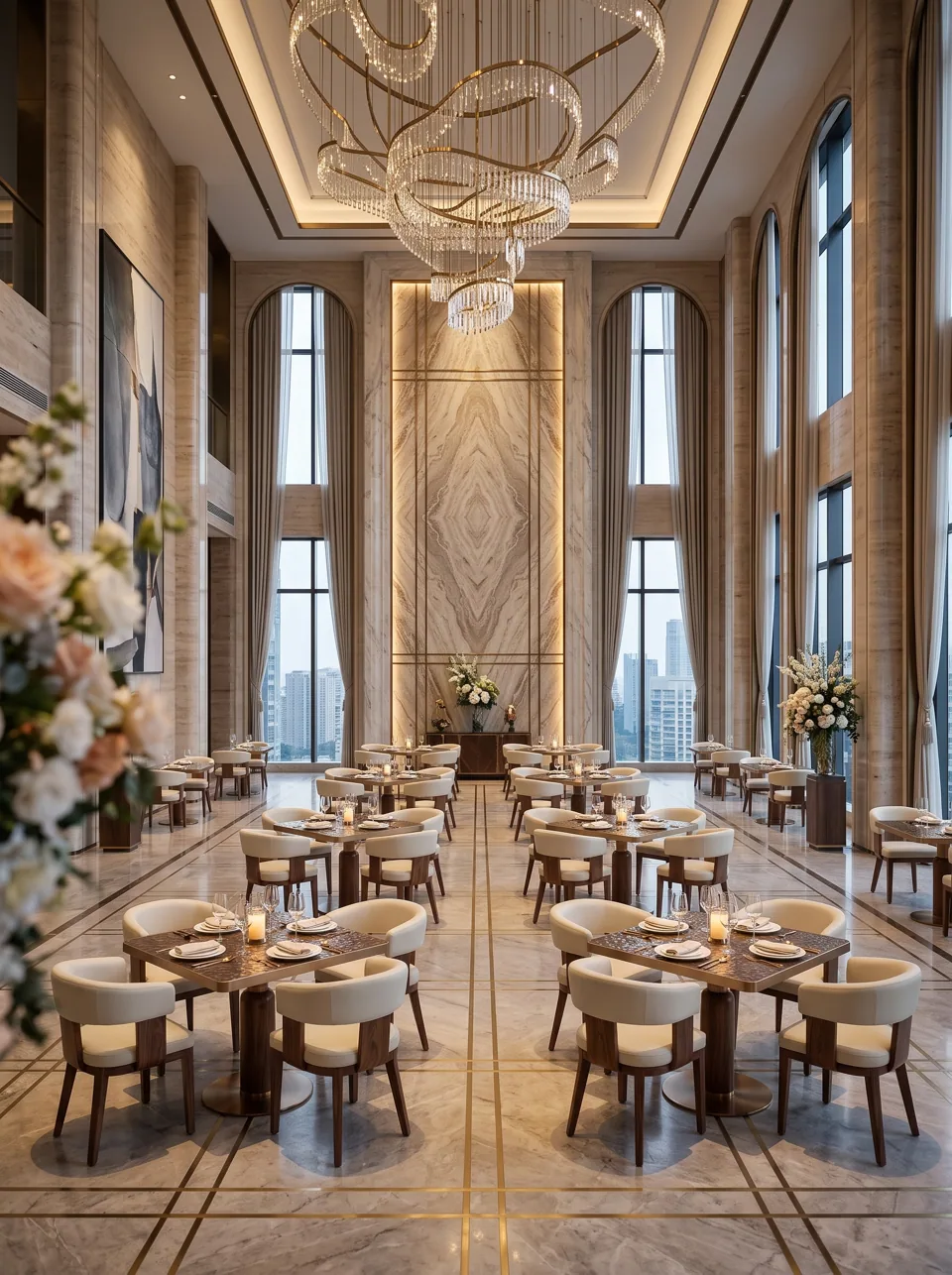
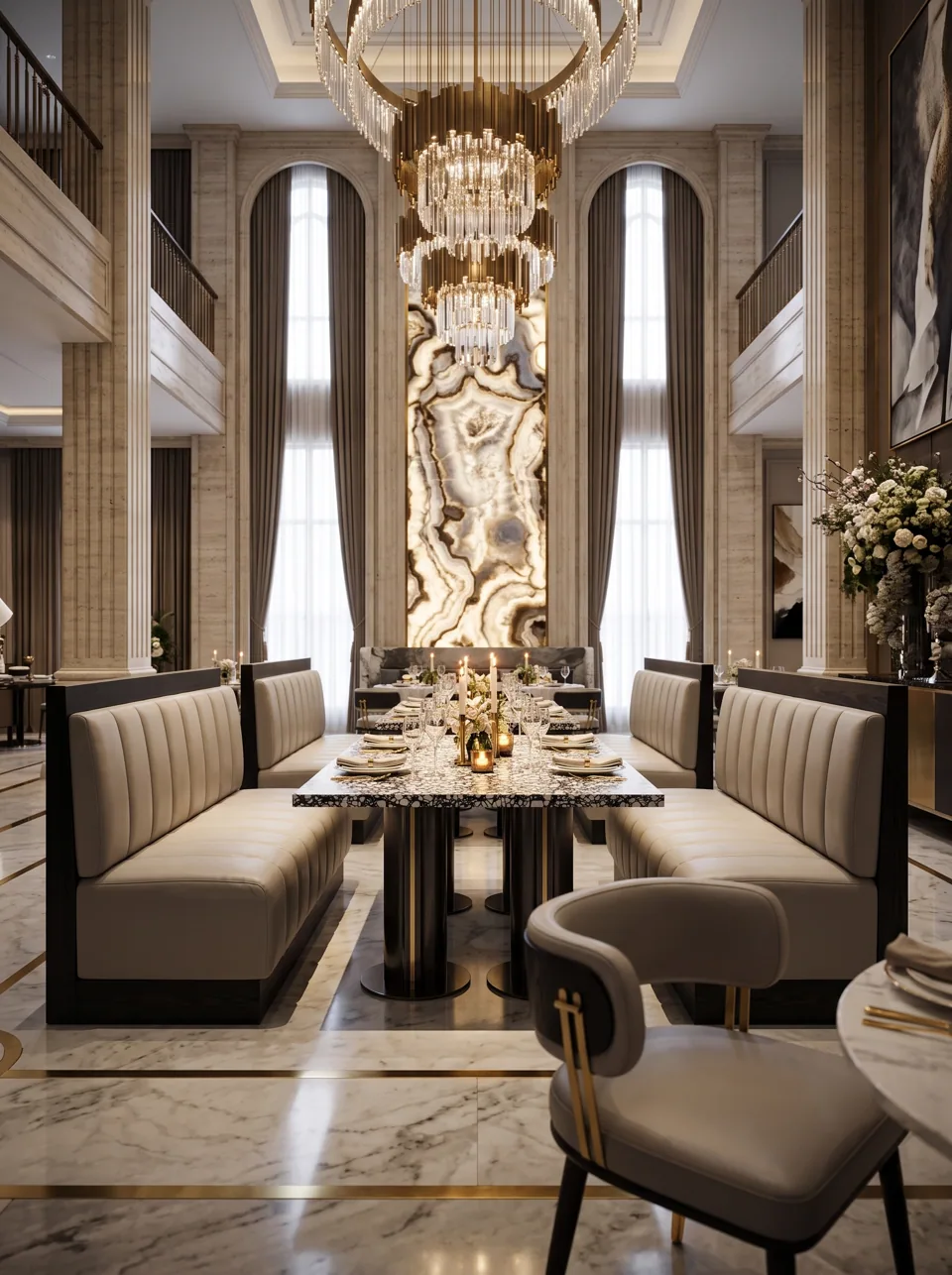
Hotel FF&E vs OS&E: Definitions, Examples and Budget Lines (2026)
What counts as FF&E and what counts as OS&E in a hotel project, where the grey areas sit, how the FF&E reserve works and how to keep budgets from overlapping.
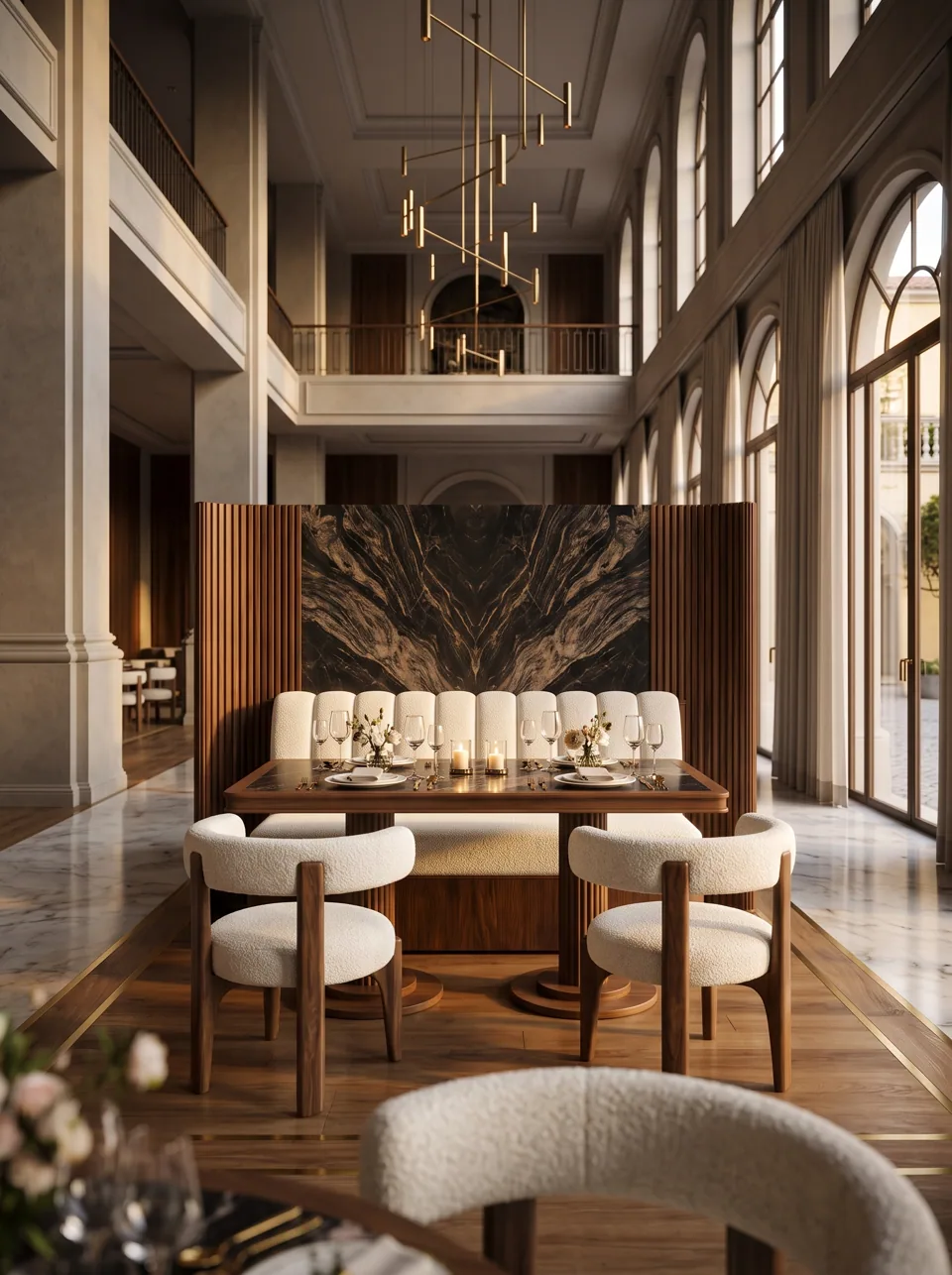
Short answer: FF&E (furniture, fixtures and equipment) covers the movable, long-life items that furnish a hotel: lounge chairs, sofas, beds, casegoods, decorative lighting, carpets, window treatments and artwork. OS&E (operating supplies and equipment) covers the shorter-life items needed to run the hotel day to day: linens, towels, tableware, glassware, cutlery, kitchen smallwares, guest amenities, uniforms and housekeeping equipment. Built-in elements and building systems usually belong to the construction budget, not FF&E. Each project defines the exact boundaries in its budget and contracts.
Most hotel budget disputes do not happen because someone overspent; they happen because two people both thought an item belonged to the other's budget. Clear definitions of FF&E, OS&E and construction scope at the start of a project avoid gaps, duplicate purchases and last-minute scrambles before opening.
What is FF&E in a hotel?
FF&E stands for furniture, fixtures and equipment. In hospitality it generally means the movable or semi-movable items with a useful life of several years that furnish guest rooms and public areas. They are usually purchased against a dedicated FF&E budget and depreciated over time.
Typical FF&E in hotel public areas:
- Lobby lounge chairs, sofas, ottomans, coffee and side tables
- Restaurant and bar seating, banquettes and tables
- Host stands and freestanding service stations
- Decorative lighting: floor and table lamps, often decorative pendants
- Area rugs and often wall-to-wall carpet
- Window treatments: drapery, sheers, blinds
- Artwork, mirrors and decorative accessories
- Upholstered wall panels and freestanding screens (sometimes construction, see below)
What is OS&E in a hotel?
OS&E stands for operating supplies and equipment. These are the shorter-life items the operator needs to run the hotel. They are usually bought shortly before opening against a separate pre-opening budget and replenished from the operating budget afterwards.
Typical OS&E:
- Bed linens, towels, bathrobes and pillows
- Tableware, glassware, cutlery and serving pieces
- Kitchen smallwares: pans, utensils, storage containers
- Guest-room amenities: hangers, ice buckets, tea and coffee sets
- Housekeeping carts, trolleys and cleaning equipment
- Uniforms
- Menus, folders and printed collateral
- Luggage carts and bell trolleys (sometimes FF&E)
FF&E, OS&E or construction? Where the common items usually fall
Boundaries vary between owners, brands and management companies, so treat this as a starting point rather than a rule.
| Item | Usually | Notes |
|---|---|---|
| Lobby lounge chairs and sofas | FF&E | Core FF&E |
| Restaurant chairs and tables | FF&E | Core FF&E |
| Built-in banquettes fixed to the wall | FF&E or construction | Often FF&E if made off-site by a furniture supplier; construction if built on site by the millwork contractor |
| Host stands | FF&E or construction | Freestanding host stands are usually FF&E; built-in reception desks are usually construction |
| Upholstered wall panels | FF&E or construction | Depends on fixing method and who supplies them |
| Hard-wired decorative light fixtures | FF&E or construction | Frequently split: FF&E buys the fixture, the contractor installs it |
| Wall-to-wall carpet | Often FF&E | Common in hospitality, but sometimes in construction |
| Drapery and blinds | FF&E | Track or pocket may be construction |
| Commercial kitchen equipment | Separate budget | Often a dedicated kitchen equipment package |
| TVs and in-room technology | FF&E or separate IT budget | Varies by brand |
| Tableware, linens, glassware | OS&E | Core OS&E |
| Luggage carts | OS&E or FF&E | Varies by operator |
| Signage | Separate or construction | Wayfinding often its own package |
The lesson: every grey-area item needs a named owner in the budget. A responsibility matrix, a simple table listing each item, who specifies it, who buys it and who installs it, is the most useful document you can create at the start of a project.
Why the distinction matters
- Budgeting. FF&E, OS&E and construction are usually separate budget lines, often managed by different people.
- Procurement. FF&E is often bought by a purchasing agent working from the designer's specification; OS&E is often bought by the operator's pre-opening team; construction items are bought through the contractor.
- Timing. FF&E has long lead times and must be ordered months before opening. OS&E is often ordered later, though some items, such as custom-logo tableware, also need lead time.
- Accounting and tax. FF&E is generally capitalised and depreciated, and depreciation periods differ by asset class and country. Your accountant or tax advisor should classify each item.
- Brand standards. Branded hotels often publish FF&E and OS&E standards that dictate what is required and sometimes from which approved sources.
What is an FF&E reserve?
Hotel management and franchise agreements commonly require the owner to set aside a percentage of revenue each year in an FF&E reserve, a fund for replacing furniture, fixtures and equipment as they wear out. A figure of around 4% of total revenue is widely used, often phased in over the first years of operation, but the exact percentage is set in each agreement.
The reserve exists because FF&E wears out on a predictable cycle. Soft goods such as upholstery, carpet and drapery are commonly refreshed every five to seven years, while casegoods and other hard items often last longer before a full renovation. Specifying durable, re-upholsterable furniture at the start, with replaceable seat cushions, removable seat pads and repairable frames, stretches the reserve further.
How to build an FF&E budget for hotel public areas
- List every area: lobby, lounge, restaurant, bar, private dining, meeting rooms, pre-function, corridors, fitness and spa.
- Build the item list from the design with quantities by area. Each item gets a code, such as LB-01 for the first lobby lounge chair.
- Assign every grey-area item to FF&E, OS&E or construction in a responsibility matrix.
- Get budget prices from manufacturers or your purchasing agent, including COM/COL yardage where relevant.
- Add logistics: freight, duties, warehousing, delivery and installation. For imported FF&E these can be a significant share of landed cost.
- Add procurement fees, taxes and contingency. Contingency covers design changes and price movements.
- Lock the budget to the specification, and track every change through it.
How Lobby Seat fits
Lobby Seat (a line by EASEN Commercial Furniture) supplies FF&E for public areas: lobby seating, banquettes, restaurant and bar seating, tables, host stands and wall panels. We do not supply OS&E. For grey-area items such as wall-fixed banquettes and host stands, we build them as factory-made furniture with fixing details, so they can sit cleanly in the FF&E package rather than becoming site millwork.
Common mistakes
- No responsibility matrix. Items such as banquettes, lighting and wall panels fall between FF&E and construction, and nobody orders them.
- Double counting. The same item appears in the contractor's scope and the FF&E budget.
- Forgetting logistics. Budgets that list only ex-factory prices underestimate landed cost.
- Treating COM as free. Customer's own material has its own cost, lead time and shipping to the factory.
- Ordering OS&E too late. Custom tableware and uniforms can take months.
- Specifying non-repairable furniture. It shortens the replacement cycle and drains the FF&E reserve faster.
FAQ
Is carpet FF&E or construction in a hotel?
In hospitality projects carpet is very often treated as FF&E, especially in guest rooms and corridors, because it is replaced on a soft-goods cycle. Some projects place it in construction. Confirm it in your responsibility matrix.
Who is responsible for buying FF&E?
Usually the owner, often through a purchasing agent who issues purchase orders against the designer's specification. On some projects the operator or the contractor procures it. The management agreement and the project contracts define this.
Are banquettes FF&E?
Banquettes made off-site by a furniture manufacturer and delivered as finished items are commonly FF&E, even if they are fixed to the wall. Banquettes built on site by a joinery contractor are usually construction. Our public-area banquettes are supplied as finished FF&E items.
What does OS&E include for a hotel restaurant?
Tableware, glassware, cutlery, serving equipment, menus, linens, kitchen smallwares and uniforms. Restaurant furniture and lighting are FF&E, and fixed kitchen equipment is usually its own package.
How often is hotel FF&E replaced?
Soft goods are commonly refreshed every five to seven years and larger renovations happen less often, but the actual cycle depends on use, brand standards and the quality bought originally.
Share your FF&E specification, drawings or a short project brief with quantities and target dates. We reply with a quote, clarifications and lead times by item.
Request a quote